


Air Master
Typically replies instantly
Typically replies instantly
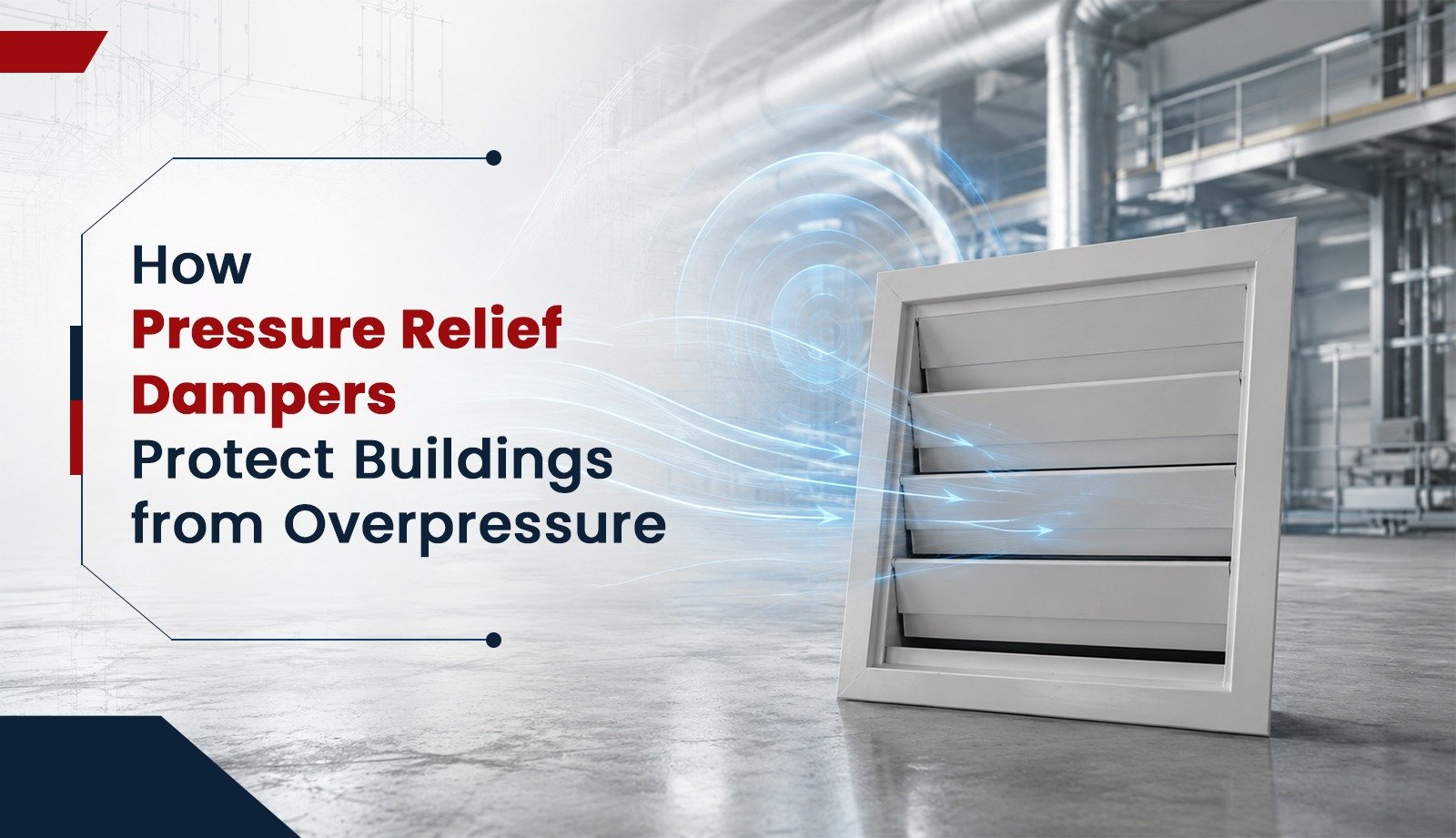
Walk into any commercial kitchen, hospital isolation ward, or industrial plant room and you'll find air moving in carefully engineered patterns — pushed in by supply fans, pulled out by exhaust systems, balanced to keep pressure exactly where it needs to be. But what happens when that balance tips? When a fan surges, a duct gets blocked, or a door slams shut in a pressurized corridor, the air inside has nowhere to go. Pressure builds. And unless something is designed to release it, that pressure starts looking for a way out on its own — usually through a bent duct panel, a jammed door, or a damaged ceiling tile.
This is the exact problem pressure relief dampers are built to solve.
Overpressure rarely announces itself with a bang. It shows up as a door that suddenly won't open against the airflow, a rattling duct joint, or an HVAC system that seems to be working twice as hard for half the comfort. Left unaddressed, sustained pressure imbalance can:
None of these are dramatic on day one. They're slow, compounding failures — which is exactly why they're so often overlooked until something breaks.
Unlike a standard volume control damper, which is set once and stays put, a pressure relief damper is built to respond in real time. Its blades stay shut under normal conditions and open automatically the moment pressure crosses a pre-set threshold, letting excess air escape in one direction before pressure has a chance to do any damage.
That threshold isn't guesswork. The blades are factory-calibrated using precisely fixed counterweights, so the damper opens at the exact pressure level the space requires — no more, no less. And because building requirements change over time, those weights can be adjusted on site if the application shifts, without replacing the unit.
For facilities that need tighter, automated control, the same damper can be fitted with an actuator that responds directly to a Building Management System, opening and closing based on live signals rather than airflow alone. This is particularly useful in DG (diesel generator) rooms, plant rooms, and exhaust ducting, where pressure conditions can change quickly and manual adjustment isn't practical.
Pressure relief dampers aren't a niche accessory — they're a standard requirement in several building types:
In each of these, the damper isn't just protecting ductwork — it's protecting the integrity of the entire pressure-dependent system around it.
The mistake most projects make isn't skipping pressure relief dampers altogether — it's under-specifying them. A damper calibrated for the wrong pressure range will either open too early, wasting conditioned air, or too late, defeating its own purpose. Getting this right depends on accurate blade sizing, correct weight calibration, and choosing between wall-mounted and duct-mounted configurations based on how the space actually behaves — not just how the drawings say it should.
This is where working with a manufacturer that tests every unit before it ships, rather than assembling to a generic spec sheet, makes a measurable difference in how the system performs once it's actually installed.
Air Master has spent years building HVAC dampers for exactly these conditions, with each pressure relief damper factory-tested to hold its calibrated setting under real operating loads — including a fire-rated version for applications where pressure control and fire safety requirements overlap. For consultants, contractors, and facility teams who'd rather solve this at the specification stage than after a duct fails, that reliability is the whole point.