


Air Master
Typically replies instantly
Typically replies instantly
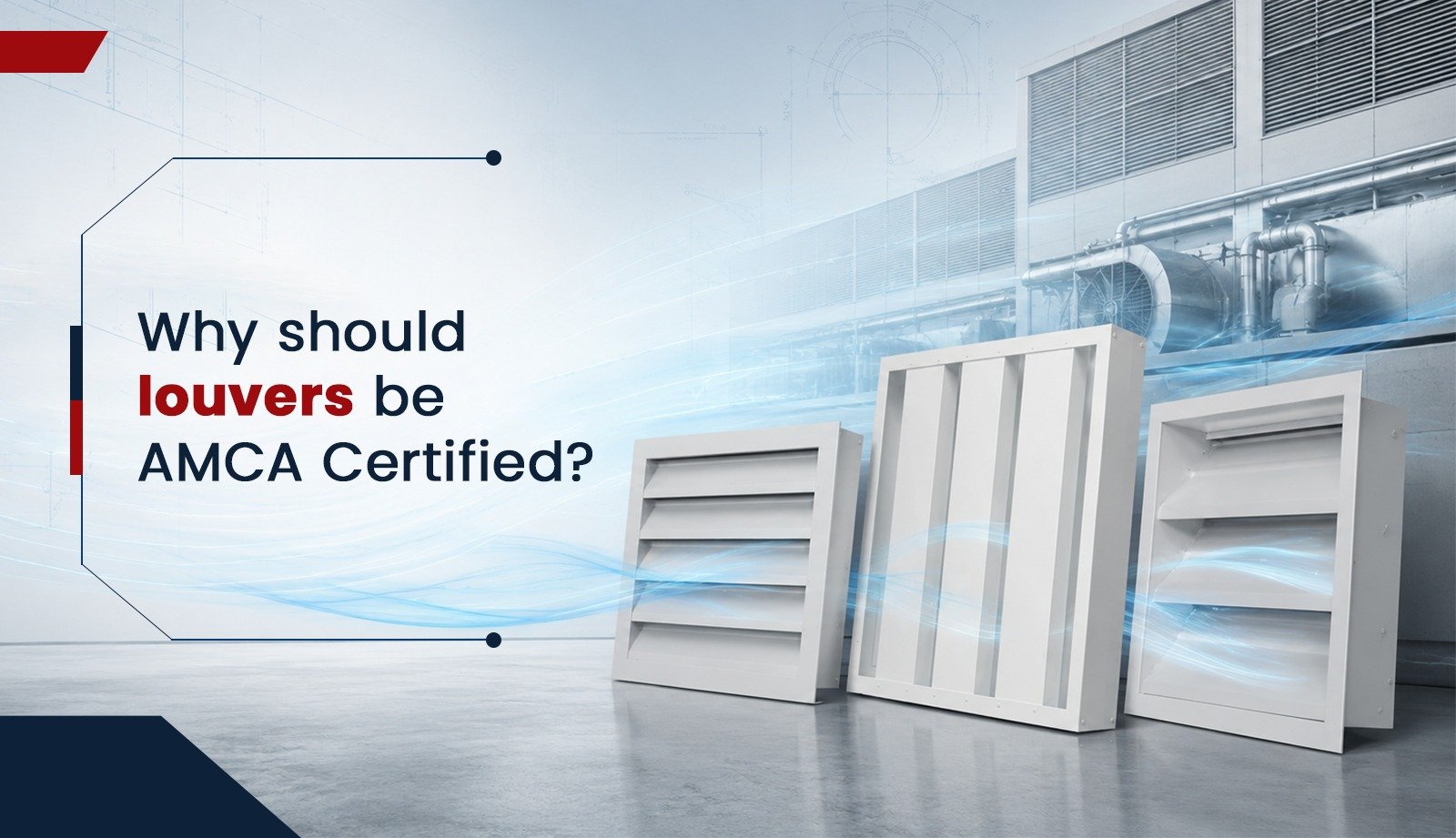
Picture this. You've just handed over a brand-new commercial building. The HVAC system hums along beautifully in the mock-up, the drawings look perfect, and the client is happy. Then the monsoon hits. Water starts creeping in through the intake louvers. Or worse — six months in, the facility manager calls to say energy bills have quietly crept up and nobody can figure out why.
More often than not, the culprit isn't the chiller or the ductwork. It's a louver that was never actually tested to do what its spec sheet claimed.
That's the quiet problem with uncertified louvers — they look identical to certified ones on paper, but nobody has actually verified how they perform. And that's exactly the gap AMCA certification is designed to close.
AMCA (Air Movement and Control Association International) is the global body that sets performance standards for air movement products — fans, dampers, and louvers included. When a louver carries the AMCA Certified Ratings Seal, it means the product has been independently lab-tested for airflow performance, water penetration resistance, and free area — and that the manufacturer's published data matches real-world results, not just marketing claims.
In simple terms: an AMCA certified louver's numbers are verified, not assumed.
1. What you see on the datasheet is what you get on site. Anyone can print a brochure claiming a louver blocks 99% of rainwater or offers a certain free area for airflow. Certification means those numbers were tested in a lab under standardized conditions — not estimated in-house. For architects and consultants specifying HVAC intake and exhaust points, that's the difference between a system that performs and one that just looks good on paper.
2. It protects your building from water ingress. Louvers sit on the building's most exposed surfaces — exterior walls, mechanical rooms, rooftops. If a louver's rain-defense rating hasn't been independently verified, you're trusting the manufacturer's word during the one season it truly gets tested: the first real storm. AMCA-certified louvers have already been through that test, in a lab, before they ever reach your project.
3. It directly impacts energy efficiency. A louver with an overstated free area forces the HVAC system to work harder to pull in the same volume of air, straining fans and pushing up energy consumption month after month. Certified airflow ratings mean your system is sized correctly from day one — not compensating for a louver that under-delivers.
4. It simplifies compliance. Many commercial, institutional, and industrial projects — airports, hospitals, data centers, metros — require documented, third-party-verified performance data as part of ventilation and fire-safety compliance. Specifying AMCA certified louvers removes the guesswork and the back-and-forth with approving authorities later in the project.
5. It's a mark of manufacturing discipline, not just a sticker. Certification isn't a one-time badge. Manufacturers are re-tested periodically to keep their listing active. A company that maintains AMCA certification across its louver range is signaling something bigger — consistent quality control, not just a good batch that happened to pass once.
Uncertified louvers are almost always cheaper upfront. But the true cost shows up later — in water damage repairs, in HVAC systems working overtime, in compliance delays when a project auditor asks for test data that simply doesn't exist. For a component that sits quietly on a wall and rarely gets a second thought, louvers have an outsized ability to cause expensive problems when they underperform.
At Air Master, this is exactly the philosophy behind how our louvers are engineered — from Fresh Air Louvers to Heavy Duty, Acoustic, and Sand Trap variants. As an ISO 9001 certified manufacturer with over three decades of experience across the Middle East and Indian subcontinent, we build our ventilation louvers to standards that hold up under real site conditions, not just in a showroom.
Whether you're specifying louvers for an airport terminal, a hospital, a shopping mall, or a residential high-rise, the question worth asking your supplier isn't just "what's the free area?" — it's "who tested it, and how?"
If you're working on a project and want louvers that are engineered to perform exactly as specified — rain after rain, season after season — get in touch with our team. We'll help you pick the right louver for your airflow, weather-protection, and compliance needs, backed by data you can actually trust.