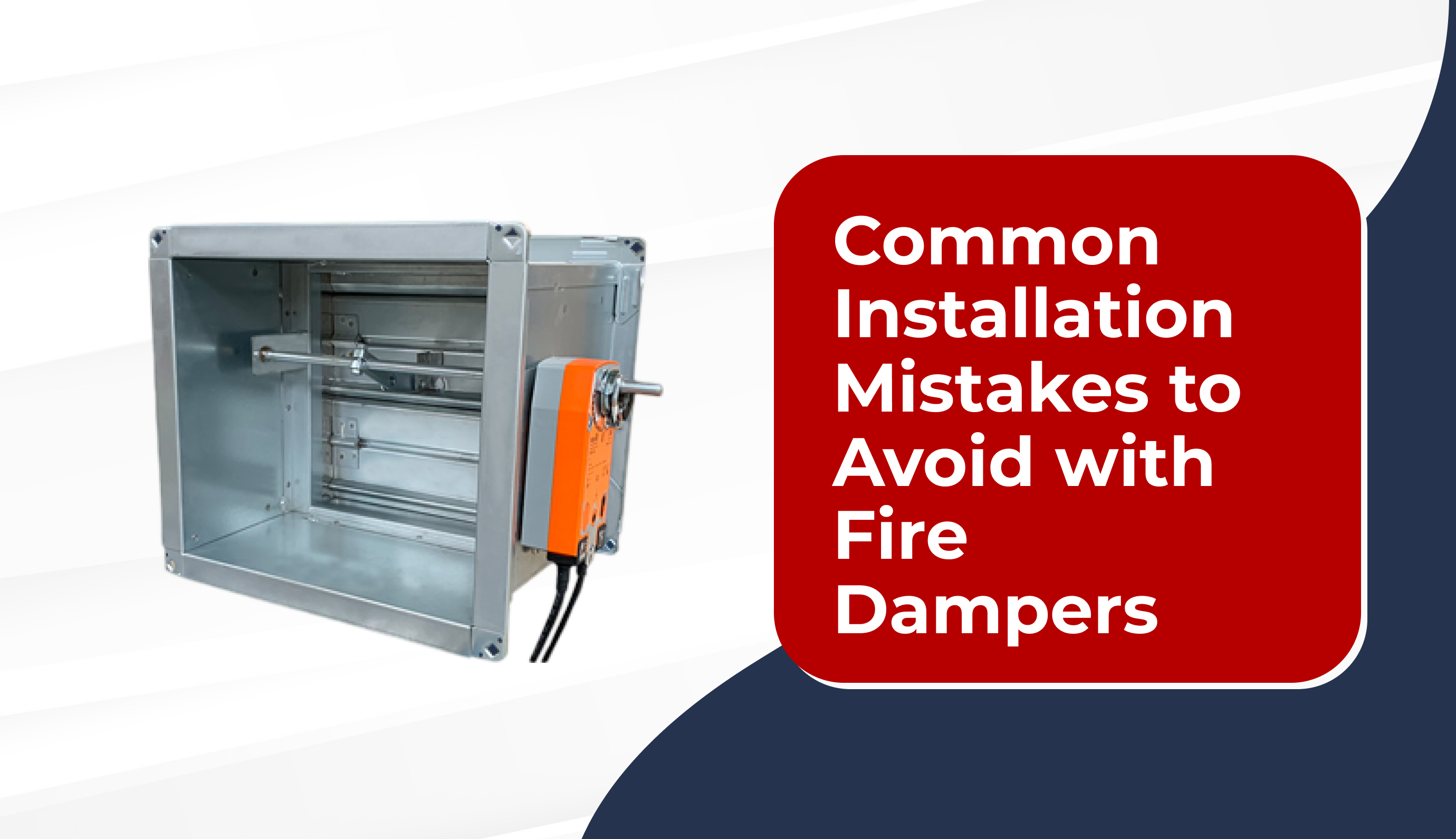
Common Installation Mistakes to Avoid with Fire Dampers

Fire dampers are essential safety components in HVAC systems designed to prevent the spread of fire and smoke through ductwork. When installed and maintained correctly, they help protect lives, minimize property damage, and ensure compliance with fire safety codes. However, improper installation can compromise their effectiveness — rendering even the best fire damper useless in an emergency.
This article highlights the most common fire damper installation mistakes and provides clear guidance on how to avoid them.
What Are Fire Dampers and Why Proper Installation Matters
Fire dampers are mechanical devices installed in duct openings that automatically close upon detecting heat or flame. Their purpose is to compartmentalize fire and smoke and slow its spread between rooms or fire zones.
If a fire damper isn’t installed correctly, it may fail to close during a fire, allowing smoke and flames to travel freely through the HVAC system. This can endanger occupants and accelerate the spread of fire.
Because fire dampers are critical safety devices, installation precision is non-negotiable.
1. Installing Fire Dampers in the Wrong Location
One of the most frequent errors is placing fire dampers in areas where they are not required — or worse, omitting them where they are needed.
Fire dampers must be installed at:
- Fire-rated barriers, such as walls or floors needing compartmentalization
- Between different fire zones within a building
- In HVAC ducts passing through critical partitions
When fire dampers are incorrectly located, they may not protect the intended fire barrier, compromising the safety design of the entire system.
How to avoid this mistake:
Always refer to building codes, fire safety plans, and HVAC design drawings to confirm the exact locations fire dampers must be installed.
2. Using Incorrect Fire Damper Types
Not all fire dampers are designed for every application. Different fire ratings, damper sizes, and actuation mechanisms are available — and choosing the wrong type can reduce effectiveness.
Examples of incorrect selection include:
- Using a damper with an insufficient fire rating
- Selecting a damper designed for air transfer applications instead of fire protection
- Installing the wrong size damper for the duct opening
How to avoid this mistake:
Work with HVAC professionals and confirm that the fire damper selected meets the required fire resistance rating, fits the duct size, and complies with applicable safety standards.
3. Poor Integration with Structural Openings
Fire dampers installed too close to floor slabs, ceiling tiles, or structural elements can interfere with their operation.
If the damper blade cannot fully close due to obstructions, it will not provide the expected protection during a fire.
How to avoid this mistake:
Ensure adequate clearance around the fire damper and coordinate installation with structural components. Maintain enough space for damper blades to operate freely.
4. Inadequate Support and Bracing
HVAC ducts carrying fire dampers must be securely supported. Lack of proper support can cause ducts and dampers to shift over time due to vibration or airflow pressure, potentially jamming the damper mechanism.
How to avoid this mistake:
Use appropriate hangers and bracing as specified by design standards to support ducts and fire dampers effectively.
5. Failure to Seal Penetrations Properly
Fire dampers must be sealed against smoke and flame penetration around the frame. Poor sealing around the unit or at wall/floor intersections allows fire and smoke to bypass the damper, negating its safety function.
Common sealing mistakes include:
- Using the wrong fire-stop material
- Leaving gaps around the damper frame
- Inadequate sealing of adjacent joints
How to avoid this mistake:
Use approved fire-stop materials and follow manufacturer instructions and fire code requirements when sealing fire damper installations.
6. Improper Connection of Actuation Devices
Many fire dampers rely on fusible links, electric actuators or air-supply systems to trigger closure. Improper connection, incorrect wiring, or inadequate access to actuators can cause dampers to fail when needed most.
How to avoid this mistake:
Verify that controls and actuation components are:
- Correctly wired and powered
- Accessible for inspection and testing
- Integrated with building fire alarm or control systems as required
7. Neglecting Inspection and Testing
Installing a fire damper is only the first step. Fire dampers must be inspected and tested periodically to confirm they operate correctly.
Failing to inspect fire dampers after installation is a common mistake that may lead to undetected malfunction.
How to avoid this mistake:
Implement a regular maintenance program that includes:
- Visual inspection
- Function testing
- Measurement of closing speed and reliability
Refer to local fire code requirements for inspection frequency and documentation standards.
8. Insufficient Documentation and Labeling
Failing to label fire dampers or maintain proper documentation can cause confusion during maintenance or emergency response. Labels and records help identify:
- Fire damper type and rating
- Installation date and location
- Inspection history
How to avoid this mistake:
Ensure all fire dampers are clearly labeled and properly documented in system records and building plans.
9. Installation Instructions
Fire Dampers should be installed according to the manufacturer’s instructions. Most mistakes happen when the dampers are not installed correctly as per the manufacturer’s instructions.
Specifications may seem minor such as Expansion gaps, Fastening systems, Retaining angles etc. can have major effects when not installed correctly.
Final Thoughts
Fire dampers are critical components of fire protection systems and should be treated with the same level of care as other life-safety equipment. Poor installation not only jeopardizes safety but also risks non-compliance with fire codes and increased liability.
Avoiding common installation mistakes ensures that your fire dampers will perform as intended — providing reliable protection when it matters most.
For expert guidance on selecting, installing, and testing fire dampers, work with qualified HVAC and fire safety professionals who understand code requirements and best practices.